When you look at her, she looks put together and highly successful. Holding her life together in a way that looks effortless from the outside.
But what you can’t see is how disconnected she is from herself, her body and her emotions.
She has learned to live from the neck up, disconnected from the language of her body, but knows how to perform stability and maintain the image of keeping everything running smoothly. But what you’re seeing is not ease, it is adaptation.
She has mastered the art of holding it all together, but has not yet learned how to hold herself. The tension she holds feels like armor. The fatigue is unexplainable. The lack of fulfillment, of presence, of true rest becomes something she learns to overlook rather than question.
This is often how burnout begins to reveal itself in high-functioning women.
What Burnout Actually Is
Burnout is not just exhaustion, it’s what prolonged stress does to your nervous system. It’s the sense that your drive, ambition and identity have started to consume you instead of elevate you.
When stress becomes chronic, your body stops moving fluidly between activation and rest. Instead, it gets stuck in survival patterns driven by the sympathetic nervous system or a form of shutdown associated with the dorsal vagal response.
At the same time, the system that regulates your stress hormones like cortisol becomes overactive and eventually dysregulated.
As a result, your body may look functional on the outside but internally, it’s working much harder just to maintain that baseline.
The Hidden Signs of Burnout in High-Functioning Women
These signs are easy to overlook because you’re still doing well.
But your body will always tell the truth. Keep reading to understand the language to look out for.
You Feel Emotionally Flat or Easily Irritated
You’re not necessarily overwhelmed with emotion but you’re not fully connected to them either.
Joy feels muted and your patience is thinner.
Neurologically, this is often tied to changes in the amygdala and prefrontal cortex. Chronic stress heightens the brain’s threat detection in the amygdala, while reducing activity in the prefrontal cortex. But this is the part responsible for emotional regulation and perspective.
So we may seem “too sensitive” but the brain is simply prioritizing survival over nuance.
You’re Exhausted… But Your Mind Won’t Slow Down
Your body feels depleted, but at night your mind won’t slow down. Replaying, planning, overthinking.
This is a sign your nervous system is still in a state of hyperarousal.
Elevated cortisol levels, especially later in the day, can disrupt your natural circadian rhythm. At the same time, your brain remains in a low-level state of vigilance and scanning, making genuine rest feel impossible.
And you absolutely need the rest, your body just doesn’t feel safe enough to fully receive it.
Brain Fog and Forgetfulness
You forget small things. Lose your train of thought in the middle of your sentence (my fiancée calls this buffering lmao). Struggle to focus the way you once could.
Chronic stress directly impacts the hippocampus, the part of the brain responsible for memory and learning. Elevated cortisol over time can impair its function, making it harder to retain information and think clearly.
This is why burnout often feels like a cognitive haze.
Not a lack of capability, but a lack of access.
You Feel Disconnected From Yourself
This one is subtle, but also deeply felt.
You may feel out of touch with your body. Unsure of what you need. Less intuitive and definitely less present.
From a nervous system perspective, this often reflects a shift away from the ventral vagal state, the state associated with safety and connection.
When your system is under chronic stress, it will prioritize protection over presence.
So you end up just going through the motions instead of feeling like you are actively participating in your life.
You Keep Pushing Even When You’re Exhausted
You know you’re tired. You can feel it.
But slowing down feels uncomfortable.
This pattern is often reinforced by dopamine-driven productivity loops. Every time you check a task off of your to-do list, it provides a small sense of reward, which can temporarily override signals of fatigue.
At the same time, your nervous system may associate stillness with vulnerability making constant motion feel safer than rest.
So you keep going.
And going.
Your Body Is Holding the Stress
Burnout is physiological.
You may notice tension in your jaw or shoulders, tummy issues, hormonal shifts, or a baseline level of fatigue that overstays its welcome.
This is because stress lives in the body through persistent activation of the nervous system and the release of stress hormones.
Over time, the body begins to store what hasn’t been processed, creating physical symptoms that don’t always have an obvious origin.
The Beginning of Healing: Returning to Regulation
Because you’ve become skilled at overriding your internal cues, you may miss these signs.
You’ve learned how to stay composed. Productive. Reliable.
Even when your body is asking for something different. that’s where regulation comes in. You can notice the signs and listen to your body before it starts screaming.
Healing burnout is not about becoming more disciplined. You clearly have the discipline. It’s about creating the conditions for your nervous system to feel safe again and directing that discipline to other areas.
That’s what allows your body to shift out of survival mode and into a state where energy, clarity, and emotional connection can return.
You can do this in simple ways:
Slowing your pace and not rushing
Letting moments of stillness exist without filling them
Reconnecting with your body through sensory experiences
Allowing rest without needing to earn it
These may seem like small things, but they’re how your system recalibrates. Your body has been protecting you the best way it knows how.
Now, the work is learning how to support it in returning to balance.
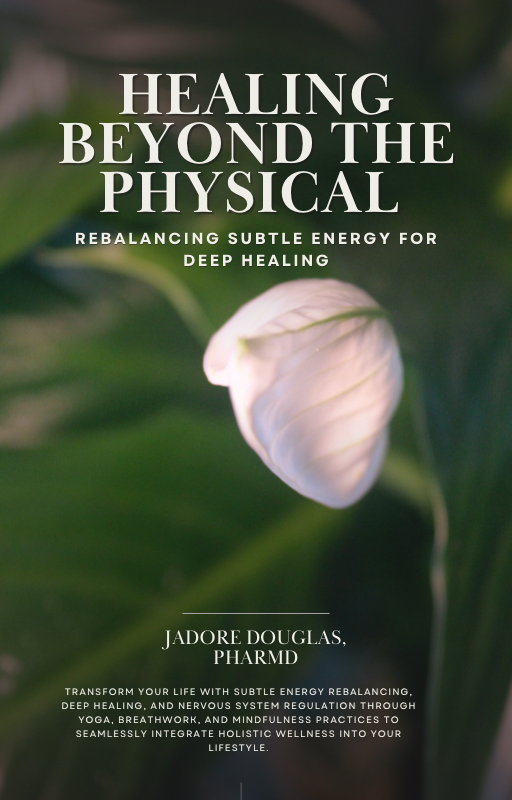
If you’re ready to go deeper into nervous system healing and restoring your energy in a way that feels sustainable, I’ve written a book that thoroughly walks you through that process and helps you to restore the flow of your subtle energy.